useNature.com ... Reflexology - Holistic Natural Healing

Natural Health & Reflexology Info
Free Online Reflexology Course
Foot Reflexology & Zone Article
Reflexology - Foot Reflex Massage - Zone Therapy
Free Online Self Help Reflexology Course
... by Dieter Luske - Editor for useNature
Reflexology - Foot Reflex Massage
Part 7 - Reflexology Foot Problems and Conclusions
GENERAL FOOT PROBLEMS
In your work with patients, please consider, that not every painful spot on the feet reflects a problem or disease. The patient may have just sore feet from walking or standing all day long.
Other problems or disturbances, like old fractures, cuts, flat feet, arthritis, etc., have to be considered as well.
On the other hand, all of these problems, may cause disturbance somewhere in a related zone, causing stress, blockages or disharmony in some organs or body parts.
To take general foot problems into account, do some ...
SPECIAL OBSERVATION
Detecting Internal and External Blockages.
Anything which does not look normal, could be a Blockage, a Disturbance to the Whole Body!
Internal Blockages are usually Calcification or the Pooling of Lymph fluid.
Calcification are deposits below the surface of the skin. Since Calcium is always present in the blood ( about 1% is constantly in circulation), it is readily deposit in the feet (lowest point of gravity), it simply drops out of circulation.
Tension and stress seem to cause this to happen. These deposits are commonly painful to touch, because they impinge on muscles and nerves.
Pockets of Lymph fluid in the feet can also become quite large and block specific zones. There can be a general swelling cause by lymph fluid in the feet, which may be relieved by elevating the feet and legs and applying light lymphatic massage, stroking/massaging ONLY in direction towards the upper body. This can be done before giving a reflexology treatment, and also after the treatment.
Another specific technique to move lymph fluid is to apply a pumping action on the feet. Simultaneously hold both feet on the toes and move back and forth and a fast rhythm for a couple of minutes.
Fluid pockets in the feet could indicate a circulation problem around that particular zone. By example, fluid on top of the feet with in the chest zone, may indicate menstrual tension/fluid retention.
External Blockages occur on the surface of the skin.
Corns, Calluses and Scars are good examples of excess material formed in response to external pressure, friction or trauma.
They block zones in much the same way as do internal blockages.
With specific foot problems, such as corns, calluses and ingrown toenails, it may be necessary to see a Podiatrist.
CONCLUSION
-
The foot reflects any disturbances in the bodies equilibrium in the form of blockages to one or more body Zones.
-
Specific problems with in a foot itself can also cause a blockage.
-
By upsetting the equilibrium, stress can accumulate if not dealt with adequately.
The Reflexologist has the opportunity to reverse the blockage and effects of stress and to free the body to seek its equilibrium. -
Foot reflexology is a treatment as well as prevention.
-
How often to treat a patient is up to how often the patient would like to be treated. Even if a treatment for a specific problem is finished, a regular treatment for prevention can go on indefinitely.
-
Reflexology works well with other Natural Healing Modalities and also with conventional medicine.
-
Reflexology is SAFE, as long as you don't use any instruments.
Knuckles can cause as much damage as any instrument.
Don't use hard pressure on any of the foot tendons. Simply use your fingers and specifically your Thumb walking technique.
-
Creams, Oil or Lotion will cause you to slip and to miss reflex points, and should therefore not be used during treatment.
However, reflexology works well with aroma therapy, as long as the essential oils are applied after the treatment. -
Can you treat yourself? Yes you can. Obviously, it is much nicer and also more effective if someone else is treating you. There will be a slight disturbance in circulation if you treat yourself, as you would have to flex your leg and foot into a treatment position.
- Is Reflexology ever discouraged? Yes, don't treat anyone with an acute foot problem, such as fractures, unhealed wounds, or acute gout. However, you could treat corresponding points on the hands of the patient.
This completes the online Reflexology Course
... happy practicing ... your partners will be forever thankful :-)
Looking for more informative articles? Go here > useNature Magazine Articles
or interested to change your Diet ? Click > The "Optimal Lifestyle Diet".
There are more Confusions about Diets and Nutrition than ever! One could have thought that with better scientific knowledge everyone would be on the same page, but unfortunately this is not the case at all, it may even be worse than ever.
Unscrupulous marketing principles, as well as food companies providing information to suit their own goals rather then nutritional facts, have further depleted scientific nutritional details.
ANY QUESTIONS? Simply post on our facebook page >  - www.facebook.com/useNature
Free Reflexology Course Menu:
-
Foot problems
Article / Course provided by useNature.com - the Editor:
Dieter Luske ©
Find more Self Help Articles - click >> Self Help Article Menu
Related Treatment Modalities : Massage
NOTE: To be part of the useNature Directory, click > list your Healing Business
* Disclaimer - Any general advice given in any article should not be relied upon and should not be taken as a substitute for visiting a qualified medical Doctor.

 Dieter Lüske - Editor
N.D.-D.C.H.-D.M.H.-D.H
Editor's Articles
Buy Now
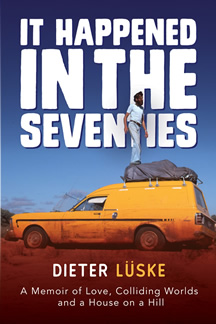
It happened in the seventies
A Memoir of Love, Colliding Worlds and a House on a Hill
Intriguing story of personal risk-taking, self-discovery and profound change.
Dieter Luske
author . writer . editor
Weight loss Guide
Lose Weight - Prevent:
Coronary Heart Disease - Hypertension - Stroke - Type 2 Diabetes - Metabolic Syndrome - Osteoarthritis - Sleep Apnea - Gallstones - Obesity Hypoventilation Syndrome.
© 1998 - 2025 useNature.com: Australia - Natural Health and Lifestyle - Holistic Health Information Services
Site Map - Terms / Privacy - Global Health | Free Alpha Music | Photography | Natural Links |