useNature.com ....Holistic Health & Sustainable Living - Indoor Pollution

Article: Indoor Airpollution - Building Biology and Sustainable Living
Indoor Air pollution - Sick Building Syndrome (SBS)
Compiled by ... the editor of Use Nature, Dieter Luske N.D.-D.C.H.-D.M.H.-D.H
Author of It happened in the seventies
Holistic Therapy Consultant - Gold Coast - Canungra
What's inside your house?
Is your house, unit or office making you sick?
Indoor air pollution is an underestimated problem and can cause numerous illnesses, and it is also a question of sustainability.
Selecting natural materials for your indoor decor will be less likely cause Sick Building Syndrome. In addition, cleaning products based on chemicals will be a major part of indoor pollution.
This article will give you a short overview and shows you possibilities to improve your house or office.
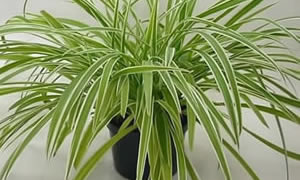
Spider Plant - Chlorophytum comosum
Indoor pollution
There is not only outdoor pollution, there is also indoor pollution, which can be even worse because of restricted ventilation inside houses.
According to the American Medical Association, 50% of all illnesses are caused or aggravated by polluted indoor air.
Indoor pollution is caused by sources such as; building materials, furnishings and household products like air fresheners, all of which may release pollutants especially solvents, sometime over decades.
Other sources related to some activities like painting carried out in your home, release pollutants intermittently.
These include smoking, the use of non vented or malfunctioning stoves, space heaters, the use of solvents in cleaning and hobby activities, paint strippers in redecorating activities, and most of all, the use of cleaning products and pesticides in house-keeping.
High pollutant concentrations can remain in the air for long periods after some of these activities were performed.
Immediate health effects may show up after a single exposure or after repeated exposures.
These include; irritation of the eyes, nose, and throat, headaches, dizziness, and fatigue.
Such immediate effects are usually short-term and treatable. Sometimes the treatment is simply eliminating the person's exposure to the source of the pollution, if it can be identified.
Symptoms of some diseases, including asthma, hypersensitivity, pneumonia, and humidifier fever may also show up soon after exposure to some indoor air pollutants.
Long term exposure can lead to Sick Building Syndrome (SBS)
Long term exposure and health associated problems are much harder to attribute to one particular source. It is always the combination and accumulation which will cause longterm sustained problems, often not even associated with indoor pollution.
SBS consists of a group of non-specific symptoms, which according to a World Health Organisation (WHO) definition can include any of the following:
Eye, nose or throat irritation; a sensation of dry mucous membranes; dry skin, rash; mental fatigue; headaches; nausea; dizziness; coughing; hoarseness; wheezing; itching and unspecific hypersensitivity reactions. ( allergy related)
What can you do? - Recommendations:
-
Ventilate your house daily for at least 15 minutes to renew the air inside the house.
-
When using materials with solvents, or which smell very strong, make sure you ventilate on a regular basis until the smell is not noticeable anymore.
-
It is best to avoid the use of toxic materials inside your house.
-
Buy cleaning products that do not contain harmful substances, or make your own with Bi-Carb - Vinegar - Eucalyptus mixes.
-
Consider an air filter system if some of the building material can't be changed.
-
Neutralize some indoor pollution with appropriate plants, see below.
-
Live sustainable, buy furniture made from natural material, if possible locally made, this includes floors and covering, cupboards, bed sheets, stay away from cheap plastics, re-use glass jars and bottles, and chuck out chemical cleaning products, and more, just check your rooms and ask yourself if what you see is good for your health.
Common indoor plants to help detoxify indoor pollution.
Pot plants can help with cleaning the air, common indoor plants may provide a natural way of helping combat "Sick Building Syndrome".
Plants such as:
Aloe - Increases Oxygen levels by absorbing Carbon Dioxide, Formaldehyde and Carbon Monoxide.
Chrysanthemums - reduce indoor air pollution - and they have pretty flowers :-)
Dracaena Massangeana, - the Lucky Bamboo species belongs to this family of plants.
Devils Ivy - Epipremnum aureum, very easy to grow from off cuts.
Ivy (Hedera Helix) - Removes faeces particles and toxins ...
The common Spider Plant - will perform photosynthesis under minimal light, and absorbing Formaldehyde, petrol and styrene fumes and Carbon Monoxide.
Peace Lilies - again removes toxins from the air.
Snake Plant - Improves indoor Air Quality, esp in the bedroom - it converts CO2 into oxygen at night.
I am sure there are more, probably most plants can improve indoor air. Why not become an indoor gardener?
Plants take substances out of the air through the tiny openings in their leaves, but roots and soil bacteria are all important in removing trace levels of toxic vapours.
Even NASA recommends mentioned plants.
For a normal house you may need 1 or 2 plants per room. Make sure you put a couple in the bedroom as well, and the bathroom, and .... everywhere.
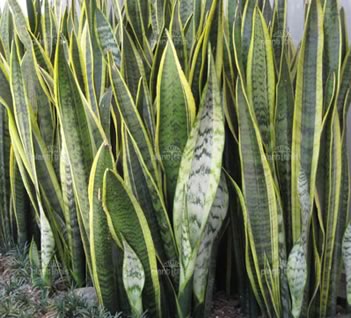
Snake Plant - Sansevieria trifasciata
Article compiled by ... the editor of Use Nature, Dieter Luske
* Disclaimer - Any general advice given in any article should not be relied upon and should not be taken as a substitute for visiting a qualified medical Doctor.


 Dieter Lüske - Editor
N.D.-D.C.H.-D.M.H.-D.H
Editor's Articles
Organic Designs

Facebook Groups
please join:
Healing with Art
Relax with Art

creative art classes
all levels - all styles
individual teaching
Integrating Brain Plasticity
Gold Cost - Hinterland
Scenic Rim - Canungra
Healing with Sound

Alchemix
Recording Studios
Sound Production:Recording - Mixing &
Mastering Services
Voice Over's
© 1998 - 2024 useNature.com: Australia - Natural Health and Lifestyle Directory - Allied Holistic Health Information Services
Site Map - Terms / Privacy | Global Health | Free Alpha Music | Photography | Natural Links |