useNature.com ... Holistic Health - Emotional Choices Counselling

'Lollipop Society'
Emotional Choices and Responses
Lifestyle Online Magazine - Holistic Health Information
Article: Lollipop Society - Emotional Choices and Responses Counselling

Article extracted from a workshop & book called:
DO YOU BELIEVE IN YOU - by Dieter Luske© - Gold Coast
Author of It happened in the seventies
ARTICLE NUMBER - 17 - Chapter 3
Do we live in a Lollipop Society?
Everything is rewarded, instant gratification, consuming (anything) to make you feel better?
I am sure you are aware that the first time you started to eat (or rather drink), may have been as a result of your mother responding to your screaming; "she fed you to make you feel better"; ... and she succeeded. Sooner or later you discovered that whenever you felt cranky, because you were hungry, wet, lonely or whatever, by showing that you were uncomfortable, somehow, your mother came to feed you.
So far this response is a simple natural learning response. Within time, the learning constantly deepened.
Then you started to grow up, and sooner or later you got a bit sick, (perhaps a cold), and something funny happened.
(Not all parents do this, but certainly, at least in the past, a lot did.)
Your parent would reward your cold with a lollipop, or something to make you feel better, just a natural response, nothing wrong, (no blaming here):
"Here sweetie that will make you feel better." Instead of a sweet it could be something like a toy, a book or any little reward, any of them in effect being and representing metaphoric lollipops.
The difference in your adulthood reaction is that you reward yourself; you may eat something or buy yourself something nice in order to feel good (compulsive shopping). Some of us may not be able to manage to make our self feel better without using something external. That would make us 'dependent', not capable of relying on our own interal resources.
Actually we probably could blame all human misery on this principle; gratification, the need for more, greed, needing to be right, wanting power; everything could be blamed on this principle that we need something to make us feel good or better.
Obviously we all do that to a certain extend, without causing any harm whatsoever, however by bringing this principle into our awareness we may be able to understand some of our behaviours and may even choose to select a better and more suited behaviour.
Possible now, for the first time, you are aware of that response in wanting something nice to make us feel good, either in yourself or friends and family.
To fix this "little problem" is easy, as we simply go by the old rule:
IF YOU DO WHAT YOU ALWAYS DO, YOU GET WHAT YOU ALWAYS GET
... so, do something else. This something else, is to work the other way around.
Be proactive, change before you have to change.
That is what we are going to do. We will change our usual response emotion, before we get that emotion. This is called emotional choice.
Coming back to the 'lollipop society,' and the the reason I coined the phrase.
Firstly, our whole society seems to react like this; secondly, if you take your child to a doctor, (in the past, even sometimes a dentist), the child will often receive a lollipop.
That lousy lollipop may well be, in adult life, a metaphor for "instant reward", it even may be related to more serious reward systems, such as drug use.
Is that far fetched? Do you think an addict loves him/herself? Addicts need a 'lollipop' to make themselves feel better.
-
How do you make youself feel better? - Which way are you reacting?
-
Do you use too many external rewards, like sweets, drugs, food, sex, or just shopping, etc?
-
Can you find out what specific emotion you feel? The emotion associated with needing something. (could be just low blood sugar :-)
-
What is that emotion telling you, and what do you do about it?
An important aspect of achieving emotional choice is knowing how to select and access the most advantageous emotion for when you want it and need it.
Before you can do that, you obviously have to know what kind of emotion you do feel and what you would like to feel instead.
So, how are you? Or ... how or what do you feel?
If your answer is simply, 'good' or 'bad', then you are not really in touch with your emotions.
'Feeling Good' or 'Bad' can't help you, they are generalisations.
You have to know specifically what kind of emotion you feel.
Knowing your specific emotion, helps you to either choose it again, or find a more appropriate one to replace it with.
Let's have a look at feeling 'bad' and go behind that word to find out what you really feel.
Could it be that you feel: bored, lonely, restless, skeptical, sorry, lethargic, unmotivated, suspicious, anxious, nervous, fearful, hopeless, irritated, disappointed, insecure, cheated, etc?
The advantage of making these "feeling distinctions" is that your emotions actually indicate what you need to do, to feel different.
If you feel bored you look for something exciting, but what could you do specifically if you only feel bad (buy somehting)?
Knowing one emotion will give you automatically the opposite or a more suitable emotion.
Let's explore the other general feeling; 'feeling good'.
Feeling 'good' may mean you feel; joyful, intrigued, fascinated, curious, grateful, encouraged, hopeful, inspired, warm, excited, motivated, determined, sure of yourself, happy, naughty, carefree, sexy, enthusiastic, ecstatic, etc.
Having any of these above mentioned specific emotions will do a number of things for you:
-
It helps you to appreciate emotions more fully.
-
It helps you to become more aware of your emotion generally.
-
It points out to you, where those emotions are coming from.
-
It helps you to recall the emotion you need.
-
It helps you to 'avoid' doing things which make you feel 'bad'.
-
And even more important, it shows you directly, what to do, to trigger more of those emotions you want.
-
It helps you to become aware of the messages behind your emotions.
You may even have a PET EMOTION.
*This is an emotion you particularly like and also find easy to trigger.
My pet emotion is curiosity. I love to find out things and know things. If I feel bored, I trigger the feeling of curiosity, that gets me going immediately.
Find your pet emotion!
It is you who wants to be in control of your responses and of your experiences, and not be controlled by your emotions.
Let me give you one more example. Perhaps the anxiety or dread you felt about an upcoming meeting caused you to concentrate your planning on how to get out of the meeting, rather than planning the most effective presentation. If you had a pet emotion, you would have triggered curiosity or somehting apporopriate, to overcome your anxiety. You could feel curious as to how the people would respond to your presentation, or feel curious as to whom you may meet.
Alternatively you could have asked yourself "which emotion would be good to have in that situation?"
You may have come up with emotions such as determination, anticipation or others.
As you will appreciate, it makes sense to bring your life, (including your emotions) under your control or under better management.
True control comes from having a choice, having options for your emotional responses, and from having the ability to choose whichever of those options are more satisfying, given your current desires and circumstances.
Here are three main ways and victim positions of emotionally loaded situations, in which people demonstrate an inability to cope emotionally:
- People consistently and chronically respond to everyday or ongoing life situations with debilitating emotions, such as:
Feeling inadequate, helpless, ashamed, despairing, angry or frustrated.
For some people the evening news, a teenager's haircut, a filing error on your Bankcard statement, or being lied or cheated to, are occasions for their incapacitating, stress causing and often over the top emotions.
- People demonstrate a lack of emotional choice by having no satisfactory way of coping with things that they feel are intolerable, such as:
Shyness, loneliness, inadequacy, fear or guilt. Often these people try to get away from these emotions by extreme withdrawal, by violence or aggressive behaviour, or by using or abusing various substances, such as drugs, etc.
- Other people believe that it is wrong to feel certain emotions, (do you?) such as:
DESIRE, ENVY, HATE, ANGER etc.
Because of these believes, whenever they do experience one of these emotions, they respond with debilitating emotions such as guilt or shame.
Religions, traditions and customs are great for causing these kind of emotional confusions.
Take some time now to have a good long look at your own emotional responses!
-
Do you recognise yourself in any of the above emotional responses?
-
Have you got any emotional inhibitions such as a belief that you shouldn't have some particular emotions?
-
Find out your own emotional traps, (reaction to circumstances)!
-
Are any emotions hindering you from doing what you really want to do?
-
Can you make emotional distinctions? Do you know your emotions, specifically?
-
Have you got a pet emotion?
Summary on Emotions:
We have come much closer to emotional choice and control! You are aware that you have a wide range of emotions. You are aware of your emotional traps.
What are emotions?
- Emotions are our responses to any situation.
- Emotions are distinct from physical feeling that may occur at the same time.
- Emotions are definitely distinct from the value judgments we may make about them.
- Emotions are messages.
The following chapters will discuss:
-
The functional meaning of an emotion.
-
Triggering and changing an emotion.
... to be continued ... Article Number 18 > Emotional Choice
Article provided by the Editor - Dieter L. Gold Coast
Excerpt from a workshop & book - published 1993 - titled; "Do you believe in You" www.usenature.com - Dieter Luske ©
Next: Article 18 - click > Emotional Choice
or go back to the Article Menu > Self Help Article Menu



Buy Now
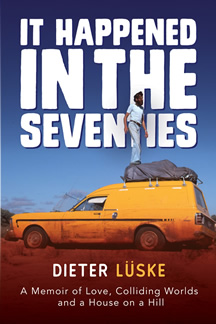
It happened in the seventies
A Memoir of Love, Colliding Worlds and a House on a Hill
Intriguing story of personal risk-taking, self-discovery and profound change.
Dieter Luske
author . writer . editor