useNature.com ... Holistic Health - Lifestyle Choice - Goal Setting & Purpose

Goal Setting - Love & Hate
Lifestyle Choice - Planning your Life
Lifestyle Online Magazine - Holistic Health Info
Article: Lifestyle Choice - Goal Setting & Purpose

Article extracted from a workshop manual & book called:
DO YOU BELIEVE IN YOU - by Dieter Luske© - Gold Coast
Author of It happened in the seventies
ARTICLE NUMBER - 32 - Chapter Three
Goal Setting - Love & Hate
- NEW BOOK - NEW BOOK - NEW BOOK - NEW BOOK - NEW BOOK - NEW BOOK - NEW BOOK - |
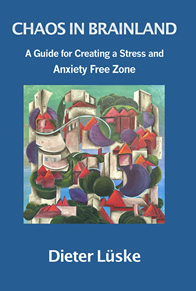
| NOTE FOR PRACTITIONERS: Combining Natural Therapies with Counselling modalities is what a Holistic Health is all about. - The Chaos in Brainland Book addresses this issue and provides a wide array of counselling techniques suitable to enrich a Holistic Natural Health Clinic for practitioners and patients alike. - BUY NOW |
STARTING WITH LOVE
And now, to stress your mind even more, you will continue searching in your subconscious mind for goals in yet another way.
The next way sounds very easy but surprisingly enough, it may bring up lots of internal resistance.
Of course by now you know how to deal with your resistance.
Get your pen ready, you are to write another list.
Allow yourself to relax—don't relax too much, just enough to reflect back on your life, to find all those magnificent things that you love to do or used to love to do.
Have a good look at all those things that you love or loved doing—a good long look.
Think about it a little and then get ready to write down your answers to the question:
WHAT DO I REALLY LOVE TO DO?
Why, do you think, that would be so important? If you work to earn a living and you don't like or love what you are doing, you will find that you get tired, stressed and un-motivated.
WHEN YOU ARE DOING WHAT YOU LOVE TO DO, WHATEVER YOU ARE DOING WILL GIVE YOU ENERGY.
Which way, do you think, you would be more successful?
Maybe it does not apply in your case, but I certainly know lots of people who never really do what they love to do.
One reason for this is a certain belief system:
"YOU HAVE TO WORK HARD TO BE SUCCESSFUL."
There is nothing wrong with working hard, particularly when you love it, but when you work hard all your life and you don't like it, and don't get anything out of it and have nothing worth showing for it, then you may be stuck in a victim or a default response. Clearly, life is not working out the way you had intended. Change quickly if you can!
What else can you do? I hope, with all your new goals and what you have learned with the Victim Principle, you have worked that out by now - if not, please read on.
A lot of people believe, that for some kind of reason they are not allowed to make money out of things they love doing. I hear that a lot and it is quite frightening to think, that most people earn money for work they don't enjoy.
What does that actually do for the quality of their work?
And how do they feel, when they come home from work? It certainly does not do anything positive for their family life.
Something else very interesting is the fact, that a lot of people who have a gift do not recognise it as a gift.
A gift is something which comes naturally and easily to you.
Therefore you may tend to think and believe that everybody has got the same gift, so you could not possibly charge money for something like that, could you?
It goes on even further. You may have studied and learned. You may simply read or know something, and again belittle yourself by thinking that "everybody knows or can do that." You then think you will not be able to charge money for something you know.
Recognise please, we are all unique, we all have skills and knowledge which other people do not have and therefore they are willing to pay for. You don't have to have ten years university study behind you to be good and valuable at something. Some of our most successful people have a limited education. How often have you seen that people standing on the outside looking in, have better ideas than those people standing on the inside. This is truly accelerated learning.
Remember please that the details come from our left brain and the overview comes from the right brain.
We all have a right side to the brain. Use it and you will find that it may be more important to have the overview than to have the details or the facts. Details and facts are easy to come by in this age of communication, internet and information overload.
That does not mean to underestimate facts and details, whoever has the facts, can charge money to supply them, but having the facts does not mean having the overview.
This means that you could have an idea, an overview and can go to someone who has the facts. He or she has something that you don't have, and you have something he or she does not have.
Who is more important?
You both are important! Where does all this lead us to? It leads us to recognise that:
-
We can have the cake and eat it too, meaning, you can do what you love to do and get plenty of money doing it.
-
Doing what you love means you do it with your heart, which is one factor which opens up your creativity and your energy. This means that you will be more healthy with an abundance of energy and you will surprise yourself with more and more creative ideas as you instinctively use the right side of your brain, therefore getting more and more of the overview.
Please do what you love, go for it. If you haven't done it already—write down:
WHAT DO I LOVE DOING?
After that, specify:
-
What would I love to do—EVERY DAY?
-
What would I love to do—ONCE A WEEK?
-
What would I love to do—ONCE A MONTH?
-
What would I love to do—ONCE A YEAR?
Now to HATE:
We mentioned hate already in the section on Emotions. We found out that we can use hate to simply motivate us. or even to find our purpose (or at least one purpose in life).
Before we can do this, let's all recognise that our mind has been trained over the years not to feel hate or not to attach much emotion to what is going on around us.
All emotions are learning experiences. If you hate something, and you think you should not hate, you will feel guilty. This means you have not learned anything.
By now you carry already two emotions hate and guilt. Please, go easy on yourself, don't judge yourself. Remember if you feel an emotion, learn from it, do something about it.
If you therefore hate something, then use that hate to do something positive about it.
I am not saying that hate is good, but look at the positive function of hate again.
Stop carrying hate around with you—do something about it.
Naturally, the way hate should work is, that if something happens that we hate, it should motivate us strongly enough to do something against it. Often that does not work anymore. One reason for this is TV, Internet and Social Media. If we hear and see extensive dreadful things going on, we hardly flicker an eyelid anymore.
For that reason I like to ask questions in a different way:
-
What would you hate if you would hate?
-
Then you can grade those things you have written down by asking yourself - what would I hate most?
Having done that, have a close look at what you hate most. If possible, go very close, meaning from first hand experience. That does not mean if you hate war that you should go to war. It may be enough to talk to people who have been in a war or who have been affected by it. That will trigger strong emotional feelings.
You may hate for example, the nearly hopeless situation with homeless people. You would be much more compelled to help them if you had talked to them. Sitting at home in our comfortable lounge rooms may make us tend to blame those people for being on the street as if it is all their own fault.
So let's ask the big question we always ask when we tend towards judging:
"what have those people been through in their life?"
They where not born homeless, they were perfect little babies, like all of us. We seem to cope well, whereas they obviously don't.
So, once again: do not blame anybody. If you hate a
situation, then use this hate motivation to find a way to
make a correction with in the system.
GO AFTER, WHAT YOU HATE!
Write down now:
-
What do you hate?
-
What would you hate, if you would hate
Creating goals out of what you love and what you hate, has finalised the chapter on creative goal setting and designing your life!
Now it's up to you to make things happen, AND therefore create the belief system that will support you, like: I CAN DO IT!
A few last minute hints:
-
Chunk your goals into manageable sizes.
-
Chunk backwards: what do I do before that' etc.
-
Pretend to create goals for somebody else, (that somebody else is you). This is like standing on the outside, looking inside. This is a better view than looking from the inside to the inside, as it may be too crowded.
-
Don't forget the next chapter. It contains the seven steps of success which will finalise the whole book and will give you some more help as it will lead you straight into the appendix about Diet for Energy
Next: Article 33 - click > 7 steps to Success
Article provided by the Editor - Dieter L.
Excerpt from a workshop & book - published 1993 - titled; "Do you believe in You"
www.usenature.com - Dieter Luske ©
or go back to the Article Menu > Self Help Article Menu



Buy Now
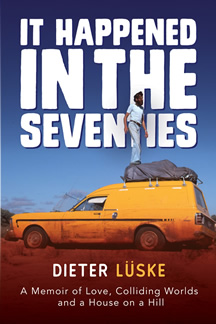
It happened in the seventies
A Memoir of Love, Colliding Worlds and a House on a Hill
Intriguing story of personal risk-taking, self-discovery and profound change.